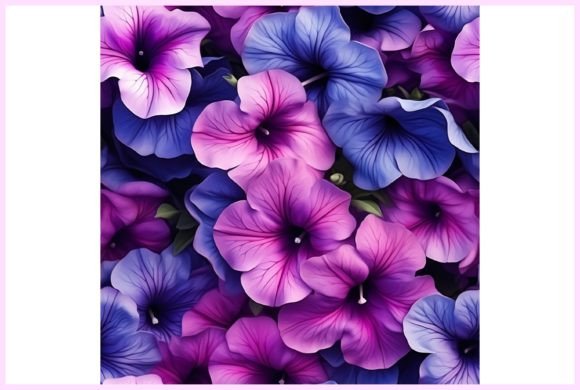
3D Flower Pattern: Elevating Your Creative Projects with Seamless Design
In the world of digital design and physical crafting, the difference between a good project and a great one often lies in the details. Among the most versatile and visually striking elements available to creators is the 3D Flower Pattern. Unlike flat, two-dimensional illustrations, a three-dimensional floral design adds depth, texture, and realism to any surface. When this design is formatted as a seamless pattern, it unlocks a universe of possibilities for artists, designers, hobbyists, and small business owners alike.
This article explores how utilizing a high-quality, tileable 3D Flowers Seamless Pattern can transform your workflow, enhance the aesthetic appeal of your products, and solve common challenges in creative production. Whether you are a seasoned graphic designer or a DIY enthusiast looking to add a professional touch to homemade gifts, understanding the power of seamless tiling is essential.
Understanding the Power of Seamless Tiling
Before diving into specific applications, it is crucial to understand what makes a "seamless" pattern so valuable. A seamless pattern is designed so that when it repeats horizontally and vertically, there are no visible breaks, lines, or misalignments at the edges. This creates an infinite, continuous field of design.
For creators, this feature is a game-changer. It eliminates the need to manually position individual flower images across a canvas, which can be time-consuming and prone to error. Instead, the 3D Flower Pattern tiles perfectly, ensuring a uniform look regardless of the size of the output. This is particularly important for large-format prints like wallpapers or fabric rolls, where continuity is key to maintaining visual integrity.
Practical Applications Across Industries
The versatility of a high-resolution 3D floral design means it can be adapted to numerous industries and hobbies. Below, we explore how different user groups can leverage this asset to achieve their goals.
Crafting and Card Making
For scrapbookers and card makers, the challenge often lies in finding backgrounds that complement rather than overwhelm the main focal point. A 3D Flower Pattern provides a rich, textured backdrop that feels luxurious without being chaotic. Because the pattern is repetitive and balanced, it allows crafters to focus on their personal photos, journaling, or embellishments. The depth of the 3D effect adds a tactile quality to printed cards, making them feel more premium to the recipient.
Fabric Printing and Textiles
In the textile industry, seamlessness is not just a convenience; it is a requirement. Whether you are designing a dress, a scarf, or home decor items like curtains, the pattern must flow naturally. A 300 DPI resolution ensures that the intricate details of the petals and shadows remain crisp even when scaled up for fabric printing. The RGB color profile allows for vibrant, true-to-life colors that pop against various fabric types, from cotton to silk.
Sublimation and Print on Demand
Entrepreneurs in the Print on Demand (POD) space are constantly seeking unique designs that stand out in crowded marketplaces. Standard clipart often looks generic. By using a 3D Flower Pattern, sellers can create custom mugs, phone cases, tote bags, and pillows that have a sophisticated, high-end appearance. The seamless nature of the file means that the design will wrap correctly around cylindrical objects like tumblers or spherical items, providing a consistent experience for the customer.
Digital Graphics and Web Design
For web designers and social media managers, loading times and file sizes are critical concerns. A seamless JPG file allows you to create full-screen backgrounds or banner graphics that are visually engaging but optimized for performance. You can use the pattern as a subtle texture behind text or as a bold header image. Its adaptability extends to mobile devices as well, ensuring that your social media graphics look cohesive whether viewed on a desktop monitor or a smartphone screen.
Technical Specifications and Implementation
To get the best results from your 3D Flower Pattern, it is helpful to understand the technical specifications provided with the file. Knowing these details helps prevent common pitfalls during the creation process.
- Resolution: At 300 DPI, the pattern is print-ready. This density is necessary for physical outputs to avoid pixelation. If you plan to use the design for web graphics, you may downsample it, but starting with high resolution gives you the flexibility to zoom in or crop without losing quality.
- Dimensions: The 2400×2400 px size offers a generous canvas for detailed work. It is large enough to serve as a standalone background for many standard print sizes while remaining manageable for most computers to render smoothly.
- Color Mode: The RGB format is ideal for screens and sublimation printers. However, if you are working with a traditional offset printer that requires CMYK, you will need to convert the file before printing to ensure color accuracy.
- Format: As a JPG file, the pattern is widely compatible with almost all design software, including Adobe Photoshop, Illustrator, Canva, and Microsoft Word. This accessibility lowers the barrier to entry, allowing users with varying levels of technical skill to utilize the asset.
Solving Common Creative Challenges
Many creators face the frustration of "pattern mismatch," where the edges of a repeated image do not align, creating distracting lines. A professionally crafted 3D Flower Pattern solves this by ensuring perfect edge blending. Additionally, achieving realistic lighting and shadow in 3D designs can be difficult. High-quality assets come pre-rendered with accurate lighting, saving you hours of manual editing in photo manipulation software.
Another common challenge is scalability. Inconsistent scaling can lead to distorted flowers or awkward spacing. Because the seamless pattern is mathematically tiled, scaling the design up or down maintains the proportional relationship between the flowers and the background, preserving the artistic intent.
Recommendations for Best Results
To maximize the utility of your 3D Flower Pattern, consider the following tips:
- Layering: Do not be afraid to layer the pattern with solid colors or other textures. Using the floral pattern as an overlay with reduced opacity can create subtle, elegant effects suitable for wedding invitations or corporate branding.
- Contrast Management: Since 3D patterns can be visually busy, ensure that any text or primary content placed over the pattern has sufficient contrast. White or black text boxes often work well to anchor the design.
- Material Testing: If you are using the pattern for textiles or wrapping paper, always order a small proof print first. Colors can shift slightly depending on the material's absorption rate and the type of ink used.
Conclusion
The 3D Flower Pattern is more than just a decorative element; it is a powerful tool that enhances the perceived value of any project. From handmade crafts to mass-produced merchandise, its seamless nature, high resolution, and realistic depth make it an indispensable asset for modern creatives. By understanding how to implement this pattern effectively, you can streamline your workflow, reduce errors, and produce stunning visuals that captivate your audience. Whether you are decorating a digital space or adorning a physical object, this pattern offers endless opportunities for creativity and expression.